
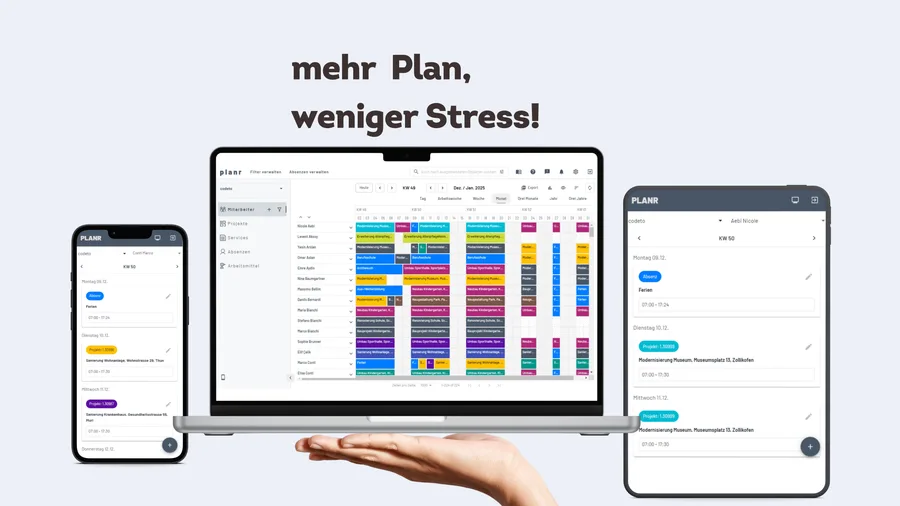
Many construction businesses still plan with Excel, Outlook calendars or verbal agreements. That works, until it does not. This article shows which signals indicate it is time for a centralised planning solution.
These Signs Should Get Your Attention
Missing Overview of Assignments
When nobody can immediately say who is working where and when, that is not an organisational problem. It is a tooling problem. Information spread across multiple lists and calendars leads to uncertainty, double bookings and unnecessary back-and-forth. This pain is especially noticeable in larger teams or when planning across departments.
Multiple Tools, No Common Thread
Excel for planning, Outlook for absences, WhatsApp for last-minute changes. When information lives in different places, speed suffers. Coordination takes longer, mistakes creep in and flexible deployment becomes harder than it needs to be.
Growing Demand for Transparency
As teams grow or new processes are introduced, the need for a unified planning basis increases. Anyone still consolidating data manually is losing valuable time.
Define Clear Goals From the Start
A new planning tool only delivers real value if it’s clear from the beginning what it needs to achieve. Three goals have proven effective in practice:
Independent Overview for Management
Leadership and team leads should be able to see capacity distribution at any time. Without asking anyone or searching through files.
Track Adoption Rates
How many employees per department are actively scheduled? This metric shows whether the tool is genuinely being used day-to-day.
Qualitative Improvements
Faster response times, clearer processes, less coordination between teams. These are harder to measure, but immediately noticeable in daily operations.
How to Measure the Success of the Transition
Is the Tool Being Used?
A growing share of actively scheduled employees shows the transition is working. Not just technically, but in people’s heads too.
Has the Overview Improved?
Central planning creates a more complete picture of available and occupied capacity. Bottlenecks become visible earlier, before they become problems.
Fewer Questions Back and Forth?
When managers can access relevant information independently without asking anyone, a core goal of the rollout has been achieved.
Conclusion: When Is the Switch Worth It?
A central planning tool is worth it when the overview of assignments is missing, Excel or Outlook are becoming too cumbersome, last-minute changes are hard to communicate, managers need too many back-and-forths for a current overview, or the team is growing and existing processes no longer scale. Experience shows: whoever starts with clear goals and measures success against a few concrete criteria makes the transition significantly easier for themselves and for the whole team.